Silhouette Chandeliers with Candle Light
A Vintage Whisper That Stitches With Grace
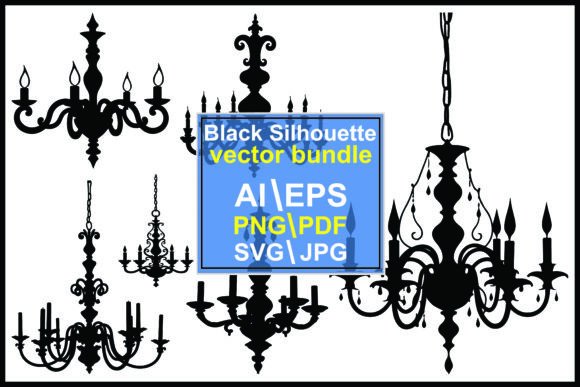
First impression? Quiet elegance. Silhouette Chandeliers with Candle Light isn’t loud—it’s the kind of design that draws you in slowly: ornate but not overwhelming, classic without feeling dated, and unmistakably vintage in spirit. As an embroidery designer who’s stitched everything from nursery onesies to boutique aprons, I immediately saw its potential—not as a standalone statement, but as a refined accent. It reads like a hand-drawn interior sketch translated into stitch: clean black outlines, balanced negative space, and subtle candle glow implied through shape alone. No gradients, no photorealism—just confident silhouette language. That simplicity is its strength, especially for embroidery.
Where It Truly Shines (and Where It Needs Care)
I tested Silhouette Chandeliers with Candle Light on a few real project types—starting with a custom linen tea towel for a local café’s holiday gift set. The result? Instant sophistication. The chandelier landed crisply against the natural weave, and because the design leans on strong outlines and open interiors, it avoided the “muddy fill” that plagues dense vintage motifs. On medium-weight cotton twill for an embroidered tote bag, it held up beautifully—even at 3.5 inches wide—with no thread nesting or stabilizer show-through.
But here’s where judgment matters: this isn’t a one-size-fits-all motif. On baby onesies (especially preemie or newborn sizes), I’d scale it down *only* to 2.25 inches max—and even then, only on stable, non-stretchy interlock. The fine arms and candle tips are delicate; shrink it too far, and those elements risk disappearing in the stitch. Likewise, on curved surfaces like structured caps or knit beanies, I’d avoid placing it near the crown seam unless using a low-profile stabilizer and reducing density slightly in the outer loops.
Dark fabrics? Yes—but pair it with high-contrast thread (e.g., bright white or ivory rayon) and add a light tear-away backing. Thin fabrics like voile or lightweight rayon need cutaway stabilizer underneath *and* a topping (like water-soluble film) to prevent puckering around the ornate curves. And while it works well on sweatshirts and fleece, I’d skip it on heavily textured bouclé or shaggy terry—those fibers compete with the clean lines.
More Than Just Pretty: What It Does for Your Business
As an Etsy seller and small shop owner myself, I pay attention to what makes a handmade product feel intentional—not just made, but *designed*. Silhouette Chandeliers with Candle Light elevates perceived value instantly. When stitched onto a cream-colored pillow cover for a bridal shower gift, customers didn’t just see “a chandelier”—they saw “thoughtful curation,” “vintage charm,” “quiet luxury.” That translates directly to pricing confidence and repeat buyers.
It also plays well across categories: a single chandelier works as a subtle monogram alternative on a chef’s apron; three arranged vertically become elegant nursery wall art on framed hoop embroidery; scaled down and paired with script lettering, it anchors personalized holiday stockings. Because it’s part of the Illustrations category—not a photo-based graphic or clipart—it holds up cleanly in printable mockups and digital previews, which helps convert browsers into buyers on your shop page.
That said, don’t assume automatic commercial safety. Since this is labeled a Graphics file, verify licensing before bundling it into digital embroidery kits or reselling as part of a design pack. For physical finished products (tote bags, patches, tea towels), it’s generally safe—but always double-check the terms before listing on Etsy or at craft fairs.
Practical Notes Every Embroiderer Should Try First
- Test on scrap fabric first—especially if stitching on blends or textured weaves. Watch how the candle tips and inner scrollwork resolve.
- Check thread color contrast deliberately: black-on-cream reads differently than black-on-navy or ivory-on-charcoal. Print a quick black-and-white mockup to preview readability.
- Review stitch density before hooping. Ornate silhouettes can run dense in the center—trimming a few fill stitches manually (if your software allows) often improves drape without sacrificing clarity.
- Confirm hoop size compatibility. While the design scales well, avoid pushing it beyond 4.5 inches on standard 5x7 hoops—tight corners may distort on older machines.
- Inspect small details at actual stitch size: zoom in on your embroidery software to spot any micro-gaps or overlapping paths that could cause jump stitches.
- Use proper stabilizer: medium-weight cutaway for knits, tear-away for stable wovens, and always a light topping for nap-free fabrics like linen or quilting cotton.
- Ask yourself: does this support my brand voice? If your shop leans modern-minimalist, this might feel out of place. But for cottagecore, heritage home goods, or wedding-focused makers? It’s a quiet powerhouse.
Final Thought: A Design That Earns Its Place
Silhouette Chandeliers with Candle Light doesn’t shout. It doesn’t need to. In an era of oversaturated digital embroidery files, its restraint is its reliability. It stitches cleanly, photographs beautifully, and resonates emotionally—whether stitched on a baby blanket for a vintage-themed nursery or a limited-run apron for a Parisian-style patisserie. It’s not flashy, but it’s memorable. Not trendy, but timeless enough to sell year after year. And for any embroidery designer or creative entrepreneur building a thoughtful, cohesive product line? That kind of quiet consistency is gold.