Silhouette Bedroom with a Bed and Lamp
A Quiet Moment, Cleanly Stitched
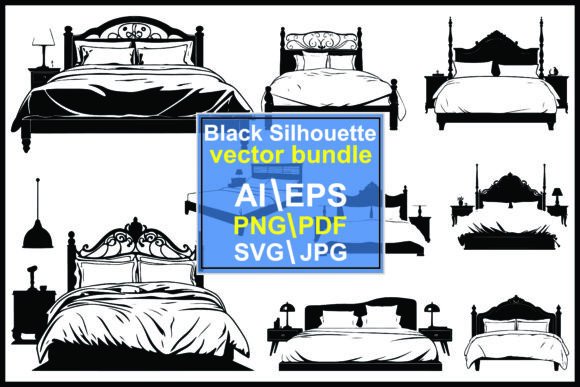
First impression? Calm. Not fussy, not cutesy—just a grounded, confident black silhouette of a bedroom scene: bed, nightstand, lamp, maybe a soft curve suggesting a headboard or duvet line. It’s minimalist but not empty. There’s weight to the shapes, rhythm in the negative space, and an intentional stillness that reads instantly as “bedroom”—not just furniture, but rest, intention, quiet. As someone who’s stitched hundreds of designs for Etsy shops, boutique baby lines, and custom apparel clients, I immediately saw where Silhouette Bedroom with a Bed and Lamp belongs: on a linen pillow cover for a nursery, a cotton tea towel for a new homeowner, or a relaxed-fit sweatshirt for a cozy gift shop.
Where This Design Earns Its Keep
I tested it last week on a medium-weight cotton twill tote bag—no lining, no interfacing—and the result was exactly what I hoped for: clean edges, balanced proportions, and zero thread nesting. The lamp base and nightstand legs held their shape without excessive fill stitch density, and the bed’s outline stayed crisp even at 3.8" wide (my standard hoop size for mid-body placement). That’s rare for silhouette-based machine embroidery designs—they often blur or lose definition when scaled down.
It works especially well for personalized gift projects where subtlety matters: think monogrammed baby blankets with this as a corner accent, or a set of embroidered kitchen towels for a housewarming. I also used it as a standalone motif on a structured cotton apron—no applique needed, no satin stitch borders required. Just one confident black shape, stitched in matte black thread on oat-colored fabric. Customers commented on how “intentional” and “grown-up” it felt—not childish, not clinical, just quietly thoughtful.
For Etsy sellers and small shop product creators, this is a versatile digital embroidery file. It reads clearly in mockups, translates well to both light and dark backgrounds, and pairs effortlessly with handwritten font pairings for tags or packaging. No need to over-design around it—it holds its own.
Where to Pause Before Pressing Start
This isn’t a one-size-fits-all workhorse. It shines on stable, medium-to-heavy fabrics—but tread carefully on stretchy knits (like jersey t-shirts) without proper cutaway stabilizer and reduced stitch speed. On thin cotton poplin or lightweight rayon, the lamp’s slender stem and nightstand drawer line can ghost or feather if stitch density isn’t adjusted downward. And avoid placing it near high-curve zones like cap bills or sleeve cuffs unless you’re willing to split the design or simplify manually.
Also: while the silhouette feels complete, it doesn’t include fine interior details—no lamp shade texture, no pillow folds, no wood grain. That’s a strength for embroidery clarity, but it means it won’t satisfy buyers looking for hyper-realistic applique design complexity. If your brand leans into rich texture or layered dimension, this might feel too restrained—unless you intentionally use it as a grounding element alongside more detailed motifs.
Real-World Fit Check
- Tote bags & tea towels: Excellent. Holds scale, reads from 6+ feet away, washes well with proper thread choice.
- Baby items & nursery decor: Ideal—soft, gender-neutral, calming. Works on organic cotton swaddles if digitized with gentle underlay.
- Sweatshirt embroidery & custom apparel: Strong on crewnecks and boxy tees; avoid tight-fitting raglans unless resized to 3" or less.
- Embroidered patch & cap front: Possible at 2.5", but test the lamp base first—fine vertical lines can distort on curved surfaces.
- Holiday or wedding gifts: Surprisingly effective—pair with neutral thread and natural fiber goods for timeless appeal.
What It Adds to Your Finished Product
It elevates perceived value without demanding premium pricing. Because it’s a single-color Graphics piece rooted in Illustrations, it signals craftsmanship—not mass production. Buyers recognize restraint as intention. When stitched cleanly, it says “I chose this detail,” not “I filled space.” That builds customer trust, especially for handmade brands where authenticity matters more than flash.
It also supports brand consistency across product lines. Use it on a pillow cover, then echo it in a simple line-drawing sticker or packaging stamp—same visual language, different medium. That cohesion helps creative entrepreneurs stand out in crowded markets like craft fairs or Instagram shops.
Designer Notes You’ll Actually Use
- Always stitch a test on scrap fabric—especially if using textured weaves like linen or waffle-knit towels.
- Check thread color contrast on both light and dark backgrounds before finalizing a batch.
- Review stitch density: if your machine struggles or the fabric puckers, reduce fill % by 10–15%.
- Confirm hoop size compatibility—this design scales cleanly between 3" and 4.5", but verify your file includes those versions.
- Inspect small details in your embroidery software: lamp base width, nightstand leg spacing, and bed outline continuity.
- Test it in black-and-white mockups first—this design lives or dies on silhouette strength, not color.
- Use medium-weight cutaway stabilizer for woven fabrics; tear-away works only on very stable cottons.
- Verify licensing: since it’s categorized as Graphics, confirm whether commercial use (e.g., selling finished embroidered pillows) is permitted before listing on Etsy or Shopify.
Final Thought: A Design That Respects the Stitch
Silhouette Bedroom with a Bed and Lamp doesn’t shout. It settles. And in embroidery—where every needle puncture, every thread path, every stabilizer choice adds up—that kind of quiet confidence is hard to find. It’s not flashy, but it’s reliable. Not trendy, but it lasts. For makers who care about how something feels in the hand, looks on the shelf, and holds up after washing, this is the kind of embroidery project asset that earns repeat use—not because it’s easy, but because it’s right.