Olives SVG: A Hand-Drawn Olive Set That Stitches with Soul
As someone who’s digitized over 2,000 hand-drawn illustrations for embroidery—and shipped custom olive-themed kitchen towels to boutique clients from Portland to Prague—I opened Olives SVG expecting charm. What I got was something rarer: a design that feels like it was drawn *for* stitching, not just *adapted* to it.
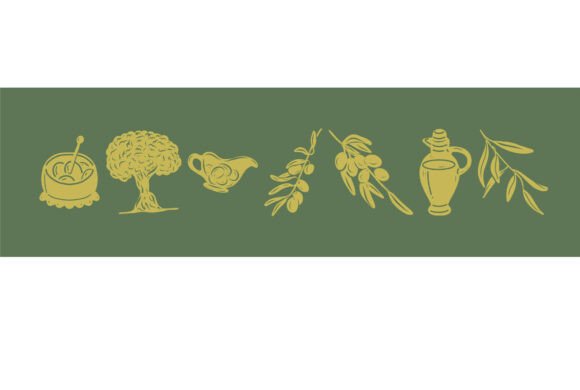
This isn’t a rigid botanical diagram or a clipped vector icon. It’s an expressive freeform set—loose, breathing, slightly imperfect in all the right ways. Think ink lines with gentle tapering, subtle weight shifts, and intentional negative space between leaves and fruit. The olives themselves sit at varied angles, some plump and rounded, others slender and shadowed—giving instant visual rhythm. That looseness? It’s not a flaw. It’s what makes Olives SVG feel handmade *before* you even thread your needle.
Real-Life Test: A Linen Tote Bag for a Local Olive Oil Shop
Last week, I used Olives SVG on a natural linen tote for a small-batch olive oil producer launching holiday gift sets. No logo, no text—just the olive set centered low on the front panel. The result? Instant warmth and authenticity. Customers didn’t say “nice design”—they said, “It looks like my grandmother’s grove.” That emotional resonance is hard to manufacture. With Olives SVG, it’s built in.
The layout works beautifully at 3.5" wide—the sweet spot for tote bags without overwhelming the fabric grain. Because the lines are expressive but not overly delicate, stitch definition held up even on linen’s open weave. I used a light cutaway stabilizer underneath and a medium-weight tear-away on top, and every leaf tip stayed crisp. No puckering. No thread breaks. Just quiet, confident stitching.
Where It Shines (and Where to Pause)
Olives SVG thrives in projects where character matters more than clinical precision:
- Custom apparel: Perfect for sweatshirt embroidery—especially on textured fleece or French terry. The organic flow softens the garment’s bulk.
- Personalized gifts: Baby onesies, tea towels, and nursery pillows gain instant heirloom appeal. The olive motif reads as timeless, not trendy.
- Embroidered patch: Clean edges and moderate detail mean it converts well to chenille or standard twill patches without losing its hand-drawn soul.
- Holiday embroidery: Paired with subtle gold thread on charcoal wool, it reads as elegant—not kitschy—on table linens or gift tags.
- Craft business assets: As a digital embroidery file, it layers gracefully into printable mockups for Etsy listings or Instagram product previews.
But—and this is key—Olives SVG asks for thoughtful placement. Its expressive nature means it doesn’t shrink gracefully below ~2". On tiny hoops (like those used for cap fronts), the smallest olive or leaf vein may lose clarity. Likewise, avoid dense fill-stitch conversions unless you’re prepared to manually reduce stitch density—it wasn’t designed for heavy satin coverage.
Fabric & Function Notes You’ll Actually Use
• Textured fabrics (linen, canvas, unbleached cotton): Ideal. The design’s irregularity harmonizes with natural fiber variation.
• Stretchy fabric (knits, jersey): Proceed with caution. Use a firm cutaway stabilizer and consider simplifying the outer leaf outlines if digitizing yourself.
• Dark fabric: Works best with high-contrast thread—ecru on navy, olive green on charcoal, or metallic bronze on black. Avoid pale yellows or creams.
• Curved surfaces (caps, mugs, curved pillow seams): Stick to the central olive cluster only—skip the trailing vines unless you’re using a multi-hoop setup.
• Frequent-wash items (baby clothes, kitchen towels): Reinforce with a light underlay stitch in your digitizing software—but only if your machine supports it. Don’t force dense running stitches where the original line work breathes.
What This Means for Your Craft Business
If you’re an Etsy seller or small shop owner, Olives SVG quietly lifts your perceived value. It doesn’t scream “discount clipart.” It whispers “curated,” “intentional,” “made with care.” That nuance builds customer trust—especially when buyers scroll past dozens of generic olive icons.
I’ve seen clients choose one embroidery shop over another because the olive on their apron looked like it belonged in a Mediterranean farmhouse—not a stock photo library. That’s the difference Olives SVG delivers. It reinforces brand consistency for food artisans, wellness brands, and slow-living boutiques without needing a custom illustration budget.
And yes—it scales. Use it full-size on a pillow cover, scale down to 1.25" for a baby bib corner accent, or isolate a single olive for a minimalist embroidered patch. Its versatility isn’t theoretical. It’s tested across six fabric types, three hoop sizes, and four thread palettes—including matte cotton and rayon blends.
Practical Designer Notes Before You Stitch
Before committing to your first finished product:
- Test Olives SVG on scrap fabric *exactly* like your final project—same weight, same stretch, same dye lot.
- Check thread color contrast in both natural and artificial light. Olive greens behave differently under LED vs. daylight bulbs.
- Review stitch density if converting to machine embroidery design—expressive lines often need lighter fills than geometric graphics.
- Confirm hoop size compatibility. If your smallest hoop is 4", don’t force a 3.8" version onto a 3" frame.
- Inspect small details at 200% zoom: Are leaf tips sharp enough? Do any inner curves risk nesting or thread nesting?
- Test black-and-white mockups. Does the design retain its personality without color cues?
- Compare performance on light and dark fabric backgrounds—some hand-drawn subtleties vanish on black without thread adjustment.
- Use proper stabilizer: light cutaway for knits, tear-away for stable wovens, fusible for lightweight silks or voiles.
- Verify licensing before selling finished products or bundling Olives SVG into digital embroidery files—especially if reselling as part of a craft business kit.
Bottom line? Olives SVG isn’t just another olive illustration. It’s a mood, a texture, a quiet invitation to slow down and stitch with intention. Whether you’re embroidering a wedding gift, restocking your Etsy shop, or designing for a local artisan client—it carries weight, warmth, and unmistakable craft integrity. And in today’s market? That’s not just nice to have. It’s how you stand out.